Sanrio History
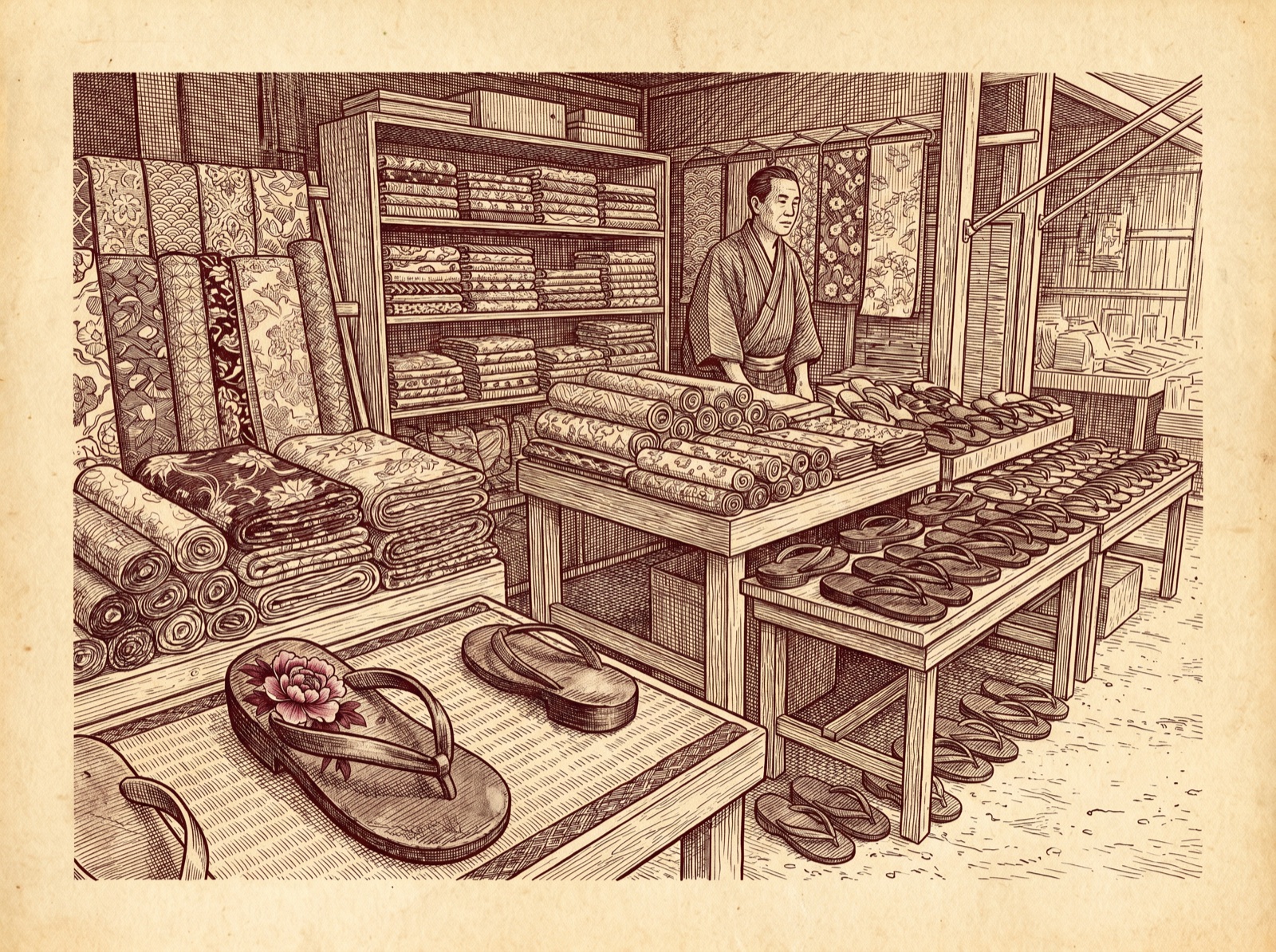
Sanrio started in 1960 selling silk, then rubber sandals, then greeting cards, and became a character empire almost by accident, when the founder noticed that a sandal with a flower painted on it outsold the same sandal without one. The sixty years since have been a sustained test of how far that premium extends: stationery, licensing, two theme parks, and an estimated $50 million decade of theatrical filmmaking. The record here runs down to which designer drew which character, and in what order.
Corporate record
The company, from 1960
Six decades, one family, and a slow pivot from making things to owning the rights to things.
Sanrio was founded on August 10, 1960 in Tokyo as the Yamanashi Silk Center, named for founder Shintaro Tsuji’s home prefecture. Within a couple of years Tsuji had moved from silk into rubber sandals, and noticed that painting a flower on a pair lifted sales. The cute motif outsold the plain product. That observation, more than any single character, is where the whole company comes from.
A 1969 meeting with Donald J. Hall Sr. of Hallmark pushed Sanrio toward greeting cards and the gift business it still calls "social communication." The company took the name Sanrio Co., Ltd. in 1973 and released its first in-house character, Coro Chan, the same year. Hello Kitty followed in 1974. The company went public on the Tokyo Stock Exchange in 1982, opened the indoor Sanrio Puroland theme park in 1990, and from around 2008 shifted decisively toward character licensing: rather than manufacture goods, it would own the characters and collect royalties on everyone else’s.
In June 2020, Shintaro Tsuji stepped down as president after about sixty years and handed control to his grandson, Tomokuni Tsuji, effective July 1. The handover skipped a generation: Tsuji’s son and expected heir, Kunihiko Tsuji, had died in 2013. The founder did not retire from view. As of mid-2026 Shintaro Tsuji is alive, aged 98, and holds the title of honorary chairman — not a memorial, a working title.
Milestones
A silk company in Tokyo
Founded August 10, 1960 as the Yamanashi Silk Center, named for founder Shintaro Tsuji’s home prefecture, with capital of ¥1,000,000. (Some corporate histories render the original name "Yamanashi Silk Company"; it is the same entity.)
Sandals, and a painted flower
Tsuji moved into rubber sandals and noticed that painting a flower on a pair lifted sales. The cute motif outsold the plain product. The whole business idea was there, found by accident.
Greeting cards and Hallmark
A meeting with Donald J. Hall Sr. of Hallmark pushed Sanrio toward greeting cards and the gift business it calls "social communication." A Strawberry Shop opened in San Francisco the same year.
Renamed Sanrio Co., Ltd.
The greeting-card operation was consolidated and the company took the name Sanrio. Its first in-house original character, Coro Chan, arrived the same year, a year before Hello Kitty.
Strawberry News
The official fan magazine, Ichigo Shimbun, launched in April 1975 at ¥100 with Snoopy on the first cover. Its readers, the "Strawberry Mates," picked Little Twin Stars’ names Kiki and Lala that year.
A public company
Listed on the Second Section of the Tokyo Stock Exchange in April 1982, promoted to the First Section in January 1984. Securities code 8136. It moved to the Prime Market in April 2022.
Sanrio Puroland
The first Sanrio theme park, indoor, opened in Tama New Town, Tokyo on December 7, 1990 — the founder’s own birthday. The outdoor park, Harmonyland in Ōita, followed in 1991.
The licensing turn
Ray Hatoyama joined in 2008 and by 2010 was steering Sanrio away from low-margin in-house manufacturing toward character licensing: own the rights, collect the royalties. The brand now reaches roughly 130 countries.
Succession to the grandson
In June 2020 Shintaro Tsuji, then 92, stepped down as president after about sixty years. Control passed to his grandson Tomokuni Tsuji, effective July 1, 2020.
The people in charge
The Tsujis and Ray Hatoyama
Three generations of one family, plus the executive who turned a maker of goods into a licensor of rights.
Shintaro Tsuji · 辻信太郎
b. December 7, 1927 · Kōfu, Yamanashi
Founded the company in 1960 and ran it for about sixty years. He modeled himself on Walt Disney and reportedly introduced himself at Disney’s Burbank studio as "Japan’s Disney." As of mid-2026 he is alive, aged 98, and holds the title of honorary chairman. He is not deceased.
Tomokuni Tsuji · 辻朋邦
Grandson of the founder
Took over at age 31, making him the youngest president of a publicly listed Japanese company. He had been a senior managing director working in product planning and sales.
Kunihiko Tsuji
d. 2013
The founder’s son and expected successor. His death in 2013 is why the 2020 handover skipped a generation, passing from grandfather straight to grandson.
Rehito "Ray" Hatoyama
General manager of strategy, 2010
A Harvard MBA who drove the shift to character licensing and to digital and global expansion. Best described as the executive who set the strategy, not the founder of any one division.
Origins
Hello Kitty
No mouth, a red bow, and a backstory set in the suburbs of London. Three designers in succession shaped the character.
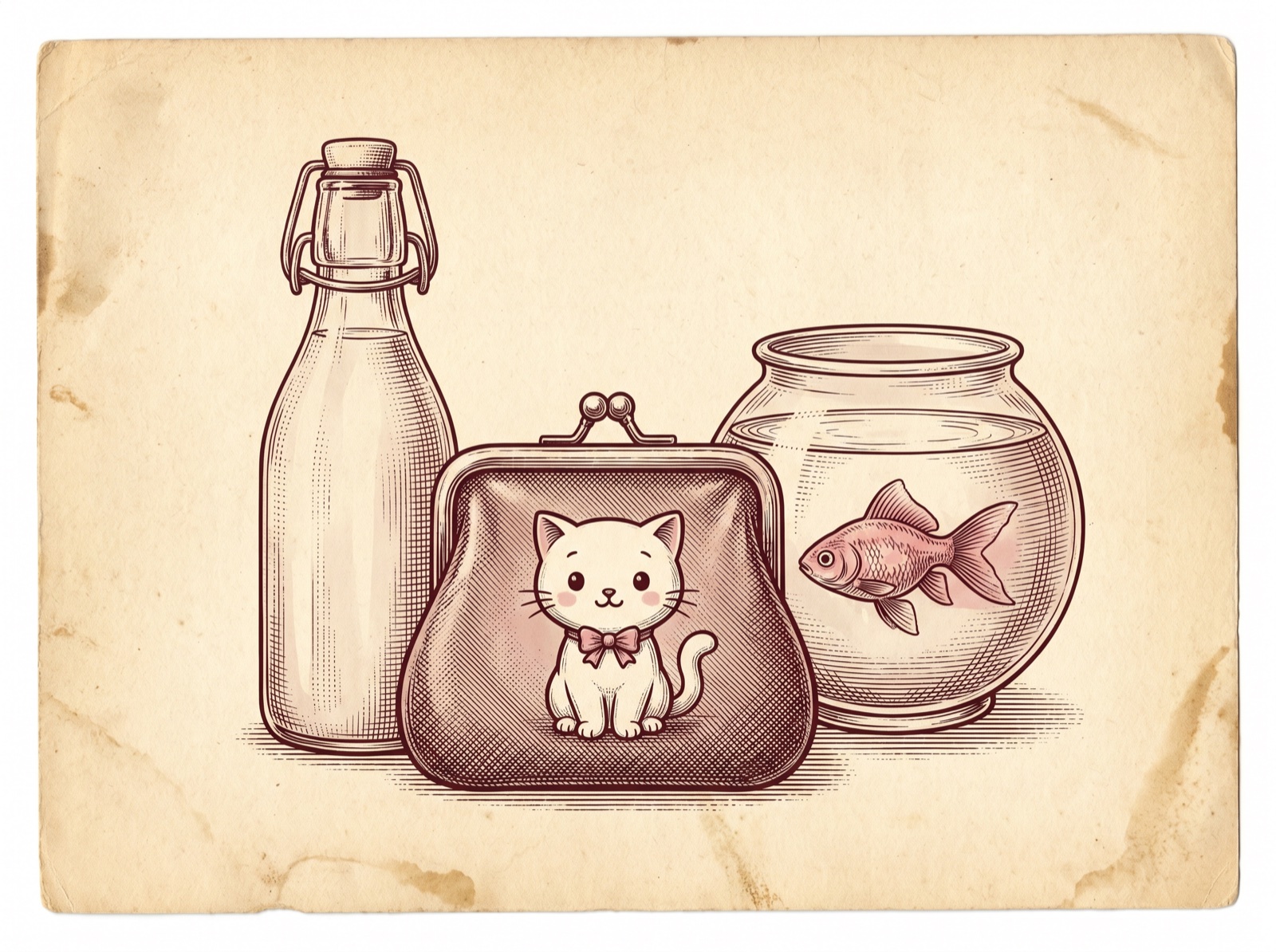
Hello Kitty was designed in 1974 and reached shops in 1975 on a vinyl coin purse, the cat seated between a milk bottle and a goldfish bowl, priced at ¥220 — under a dollar at the time. The 50th anniversary of the character therefore fell on November 1, 2024, which Sanrio marked with record results.
The original designer was Yuko Shimizu, who took the name "Kitty" from Lewis Carroll’s Through the Looking-Glass, where Alice plays with a kitten called Kitty. She left Sanrio around 1976. After a short handover to Setsuko Yonekubo, Yuko Yamaguchi became lead designer in 1980 and shaped the look for about 46 years, stepping back to an advisory role only in February 2026. The "Hello" reflects Sanrio’s social-communication motto; Tsuji reportedly considered "Hi Kitty" first.
The designers, in order
Yuko Shimizu · 清水侑子
Drew the character in 1974, around age 24, and left Sanrio about 1976 to start a family. She took the name "Kitty" from Lewis Carroll’s Through the Looking-Glass, in which Alice plays with a kitten named Kitty.
Setsuko Yonekubo
Shimizu’s former assistant, who took over temporarily and made incremental changes, including the first standing pose.
Yuko Yamaguchi · 山口裕子
Joined in 1978 and won an internal contest with a piano-playing Kitty to become lead designer in 1980. She shaped the look for about 46 years. In February 2026 she announced she is stepping back to an advisory role; her successor uses the pseudonym "Aya."
The official biography
Sanrio canonSanrio publishes a full backstory for the character. The company is firm that she is a little girl in the motif of a cat, not a pet cat.
- Full name
- Kitty White (キティ・ホワイト)
- Home
- The outskirts of London, England
- Birthday
- November 1 (Scorpio)
- Size
- As tall as five apples, and as heavy as three
- Parents
- Papa George White and mama Mary White
- The twins
- Twin sister Mimmy — mirror-image twins, told apart by their bows: Kitty’s is red, Mimmy’s is yellow. Mimmy is the shyer one.
- Likes
- Apple pie made by her mother. She bakes cookies, plays piano, and is good at music and English. She dreams of being a pianist or a poet.
- Pets
- Charmmy Kitty, a white Persian cat (2004), and a hamster named Sugar (2004).
- Boyfriend
- Dear Daniel (Daniel Star)
Two details often listed — blood type A and a "third grade" school year — appear only on fan profiles, not on any official Sanrio page, Wikipedia, or the Japan Times feature checked.
Why no mouth
Sanrio’s explanation has never changed: the absent mouth lets people project their own feelings onto her, so you can "be happy or sad together with Hello Kitty." Yamaguchi told Time the expressionless face exists so viewers can read their own mood into it; Shimizu has said she simply "couldn’t express the mouth in a cute way, so I decided not to use it." Sanrio notes she technically has a mouth — it is just not drawn. The viral theories about cancer or a satanic pact are folklore, not the company’s account.
In 2014, anthropologist Christine R. Yano was preparing label text for a Hello Kitty retrospective when Sanrio corrected her, "very firmly," for calling Kitty a cat: she is a cartoon character, a little girl, never depicted on all fours. After the line went viral, Sanrio walked it back to the more sensible version — Hello Kitty is a personification of a cat, an anthropomorphized character in the motif of one, comparable to Mickey Mouse, not a literal pet.
Character debuts
Character timeline
Chronological by debut year, from Coro Chan in 1973 to Aggretsuko in 2015. Designers are named only where a reliable source attributes one. Where none does, the line is left blank rather than guessed.
Coro Chan
Yuko Shimizu
Often cited as Sanrio’s first proper original character, predating Hello Kitty by a year.
Hello Kitty
Yuko Shimizu — lead from 1980: Yuko Yamaguchi
The white bobtail cat that launched the franchise. First product, a vinyl coin purse, sold in 1975.
Patty & Jimmy
Hiroko Suzuki (later Roko Maeda)
A boy-and-girl human duo, very popular through the 1970s.
Hello Mimmy
Kitty’s identical twin sister, drawn from the same lineage. Yellow bow to Kitty’s red.
Little Twin Stars (Kiki & Lala)
Yōko Matsumoto (romanization varies)
Twin star siblings whose names were chosen by magazine readers. Birthday December 24.
My Melody
A white rabbit in a red hood, inspired by Little Red Riding Hood. The year is well sourced; the designer is not reliably attributed.
Tuxedo Sam
A chubby bow-tied penguin said to be born in Antarctica.
Goropikadon
Minoru Onoue
A set of weather and thunder characters.
Minna no Tabo
A cheerful round-headed boy; won the fan ranking in 1988 and 1989.
Zashikibuta
A pink pig, and the first-ever Sanrio Character Ranking champion, in 1986.
Hangyodon
Hisato Inoue
A lonely, melodramatic fish-merman who says he is from China.
Marron Cream
An elegant white rabbit from Paris.
Keroppi
Akiko Chii
A green frog of the Hasunoue family. Concept in 1987; goods and official debut in 1988 (birthday July 10, 1988).
Pochacco
Minoru Onoue
A white puppy who loves walks and basketball.
Pekkle
A cheerful white duck who loves to sing and swim.
Spottie Dottie
A Dalmatian girl.
Bad Badtz-Maru
Hisato Inoue
A mischievous male penguin with spiky hair, built as the anti-cute character.
Chococat
Ikuko Shimizu (fan-attributed)
A small black cat with a chocolate nose and antenna-like whiskers; real name Choco.
Pompompurin
Akiko Chii
A male golden retriever in a brown beret, named after a real golden retriever owned by Yuko Yamaguchi. Debuted April 16, 1996.
Corocorokuririn
A round golden hamster.
Usahana
A flower-loving bunny.
Cinnamoroll
Miyuki Okumura
A white puppy with long flying ears and a cinnamon-roll tail, first called "Baby Cinnamon." Created and put to a fan vote in 2001; commercial debut June 2002.
Charmmy Kitty
Yuko Yamaguchi
Kitty White’s pet Persian, introduced alongside the hamster Sugar.
Sugarbunnies
Kazumi Fukasawa
Twin bunny pairs, one left-handed and one right-handed.
Kuromi
attributed to Yuko Yamaguchi
My Melody’s rival, a white-skull-and-pink-bow imp who debuted in the Onegai My Melody anime.
Jewelpet
Sanrio × Sega Toys (joint venture)
Jewel-eyed animal companions; the basis for an anime and a trading-card game.
Wish me mell
Miyuki Okumura
A gentle white-and-pink rabbit with droopy ears.
Gudetama
"Amy" — Emi Nagashima
An apathetic, lethargic egg yolk; placed second in Sanrio’s 2013 food-character contest.
Aggretsuko (Retsuko)
"Yeti" (pseudonym)
A 25-year-old red-panda office worker who vents work rage through death-metal karaoke. Made via an internal Sanrio contest; later a Netflix anime.
The annual Sanrio Character Ranking, a fan vote running since 1986, is charted separately in the Rankings file .
On screen
Film and animation
Between 1977 and 1985, Sanrio financed and distributed theatrical features, an estimated $50-million venture driven personally by Tsuji, who wrote some of the films himself.
Under the Sanrio Films label (its U.S. releases handled by Sanrio Communications), the company made hand-drawn features, a stop-motion Nutcracker, and dark fables that sit oddly beside the gift-shop business. The division wound down after A Journey Through Fairyland in 1985, after which Sanrio turned to character-based shorts, OVAs, and television. The ambition was real.
An Academy Award
Sanrio co-produced "Who Are the DeBolts? And Where Did They Get Nineteen Kids?" (1977, dir. John Korty), which won the 1978 Academy Award for Best Documentary Feature.
The theatrical slate, 1977–1985
| Film | Year | Director | Studio |
|---|---|---|---|
| The Mouse and His Child Generally cited as Sanrio’s first animated feature. From Russell Hoban’s 1967 novel; Peter Ustinov voiced Manny the Rat. | 1977 | Charles Swenson & Fred Wolf | Murakami-Wolf Productions, with deFaria Productions and Sanrio |
| Ringing Bell (Chirin no Suzu) From an original picture book by Takashi Yanase, the Anpanman creator. A 47-minute film that turns abruptly from idyll to dark anti-revenge parable. | 1978 | Masami Hata | Sanrio Films |
| Metamorphoses From Ovid, in five segments, narrated by Peter Ustinov. A failure, reissued about 1979 as Winds of Change with a disco score. The director is Masunaga, not "Masumura." | 1978 | Takashi Masunaga | Sanrio Films / Sanrio Communications |
| Nutcracker Fantasy Sanrio’s first stop-motion project, in a style compared to Rankin/Bass. From Hoffmann and Tchaikovsky; voices included Christopher Lee and Roddy McDowall. | 1979 | Takeo Nakamura | MOM Production · stop-motion |
| Unico: Black Cloud, White Feather A pilot short from Osamu Tezuka’s Unico manga — a separate work from the 1981 feature, despite the often-confused titles. | 1979 | Toshio Hirata | Tezuka Productions |
| The Fantastic Adventures of Unico The deliberately Disney-like feature, released March 14, 1981. | 1981 | Toshio Hirata | Madhouse, with Sanrio + Tezuka Productions |
| The Sea Prince and the Fire Child A 108-minute hand-drawn feature with watercolor backgrounds, from an original Romeo-and-Juliet story written by Shintaro Tsuji himself. | 1981 | Masami Hata | Sanrio Company / Sanrio Communications |
| Unico in the Island of Magic Murano’s theatrical debut, and the last Unico work Tezuka was involved in before his 1989 death. | 1983 | Moribi Murano | Madhouse, with Sanrio + Tezuka Productions |
| A Journey Through Fairyland A classical-music showcase, and the last film of Sanrio’s theatrical era. | 1985 | Masami Hata | Sanrio Films |
Later work, 1987–present
| Title | Year | Studio |
|---|---|---|
| Hello Kitty's Furry Tale Theater The first Hello Kitty animated series, on CBS. Tara Strong’s first major voice role. | 1987 | DIC Enterprises; animated by Toei Animation |
| Onegai My Melody A 52-episode TV anime where Kuromi first appeared. Director Makoto Moriwaki. | 2005 | Studio Comet |
| The Adventures of Hello Kitty & Friends Sanrio’s first Hello Kitty series in 3D CGI: 52 episodes of preschool edutainment. | 2008 | Sanrio Digital and Dream Cortex |
| Show by Rock!! From Sanrio’s rhythm-game IP; the company’s first late-night anime aimed at an older audience. Director Takahiro Ikezoe. | 2015 | Studio Bones |
| Hello Kitty and Friends Supercute Adventures 2D web animation on YouTube, made for Sanrio’s 60th anniversary. | 2020 | Split Studio (Brazil) |
| Hello Kitty: Super Style! 3D CGI on Amazon Kids+, directed by Jérémy Guiter, with a Carly Rae Jepsen theme. | 2022 | Watch Next Media & Monello Productions, with Maga Animation |
| Gudetama: An Eggcellent Adventure A Netflix CG-and-live-action special, directed by Motonori Sakakibara. | 2022 | OLM |
| Hello Kitty (feature film)Upcoming Licensed in 2019, the first time Sanrio gave its characters to a major U.S. film studio. Dated July 28, 2028; directors David Derrick Jr. and John Aoshima were named in May 2026. Reported as a live-action/animation hybrid. | 2028 | New Line / Warner Bros. Pictures Animation; FlynnPictureCo |
Aggretsuko, by studio Fanworks, on Netflix
Created in 2015 by a designer using the pseudonym "Yeti," through an internal Sanrio "kyarariman" (character + salaryman) contest. Retsuko is a 25-year-old red-panda accountant who vents her office rage in death-metal karaoke.
The original 100 one-minute shorts ran inside TBS’s Saturday variety show "King’s Brunch" from April 2016 to March 2018.
| Season | Premiere | Studio | Director |
|---|---|---|---|
| Season 1 | April 20, 2018 | Fanworks | Rarecho |
| Season 2 | 2019 | Fanworks | Rarecho |
| Season 3 | 2020 | Fanworks | Rarecho |
| Season 4 | 2021 | Fanworks | Rarecho |
| Season 5 (final) | February 16, 2023 | Fanworks | Rarecho |
English dub: Retsuko voiced by Erica Mendez. Rarecho himself performs Retsuko’s death-metal screams.
Sanrio Digital
Sanrio’s digital and mobile arm launched in June 2007 in Hong Kong, a joint venture between Typhoon Games and Sanrio Wave Hong Kong. It built the Hello Kitty Online MMORPG (closed beta 2008; the wider SanrioTown service finally shut down November 1, 2023) and co-made the 2008 CGI Adventures of Hello Kitty & Friends. Animoca Brands bought Sanrio Digital outright in May 2021.
Sources of record
- Wikipedia — Sanrio
- Wikipedia — Shintaro Tsuji
- Forbes — Shintaro Tsuji profile (alive, honorary chairman)
- Encyclopedia.com — Sanrio Co., Ltd.
- FundingUniverse — Sanrio company history
- Sanrio IR — Top Message ("Small Gift, Big Smile")
- Sanrio — About the founder
- Wikipedia — Strawberry News (Ichigo Shimbun)
- Wikipedia — Sanrio Puroland
- Nippon.com — the licensing strategy (Hatoyama)
- CNN — inside Sanrio’s business
- NextShark — the 2020 succession
- Wikipedia — Hello Kitty
- Wikipedia — Yuko Shimizu (original designer)
- Sanrio Hong Kong — official Hello Kitty profile
- The Japan Times — Hello Kitty feature
- Tokyo Weekender — Yuko Yamaguchi steps down
- University of Hawai‘i — "Hello Kitty is not a cat"
- NPR — the "not a cat" story
- Nikkei Asia — 50th anniversary, record profit
- Wikipedia — List of Sanrio characters
- Wikipedia — Cinnamoroll
- Wikipedia — Gudetama
- Sanrio — Character Ranking results
- Wikipedia — The Mouse and His Child (1977)
- Wikipedia — Ringing Bell (Chirin no Suzu)
- Wikipedia — Metamorphoses (1978)
- Wikipedia — Nutcracker Fantasy
- Wikipedia — Unico (films)
- Wikipedia — The Sea Prince and the Fire Child
- Tezuka Osamu Official — Unico
- Aftermath — Sanrio’s film years
- Wikipedia — Hello Kitty’s Furry Tale Theater
- Wikipedia — Hello Kitty: Super Style!
- Wikipedia — Hello Kitty Online / Sanrio Digital
- Wikipedia — Aggretsuko
- Fanworks — studio site
- Wikipedia — Onegai My Melody
- Wikipedia — Show by Rock!!